Select Recent Conferences
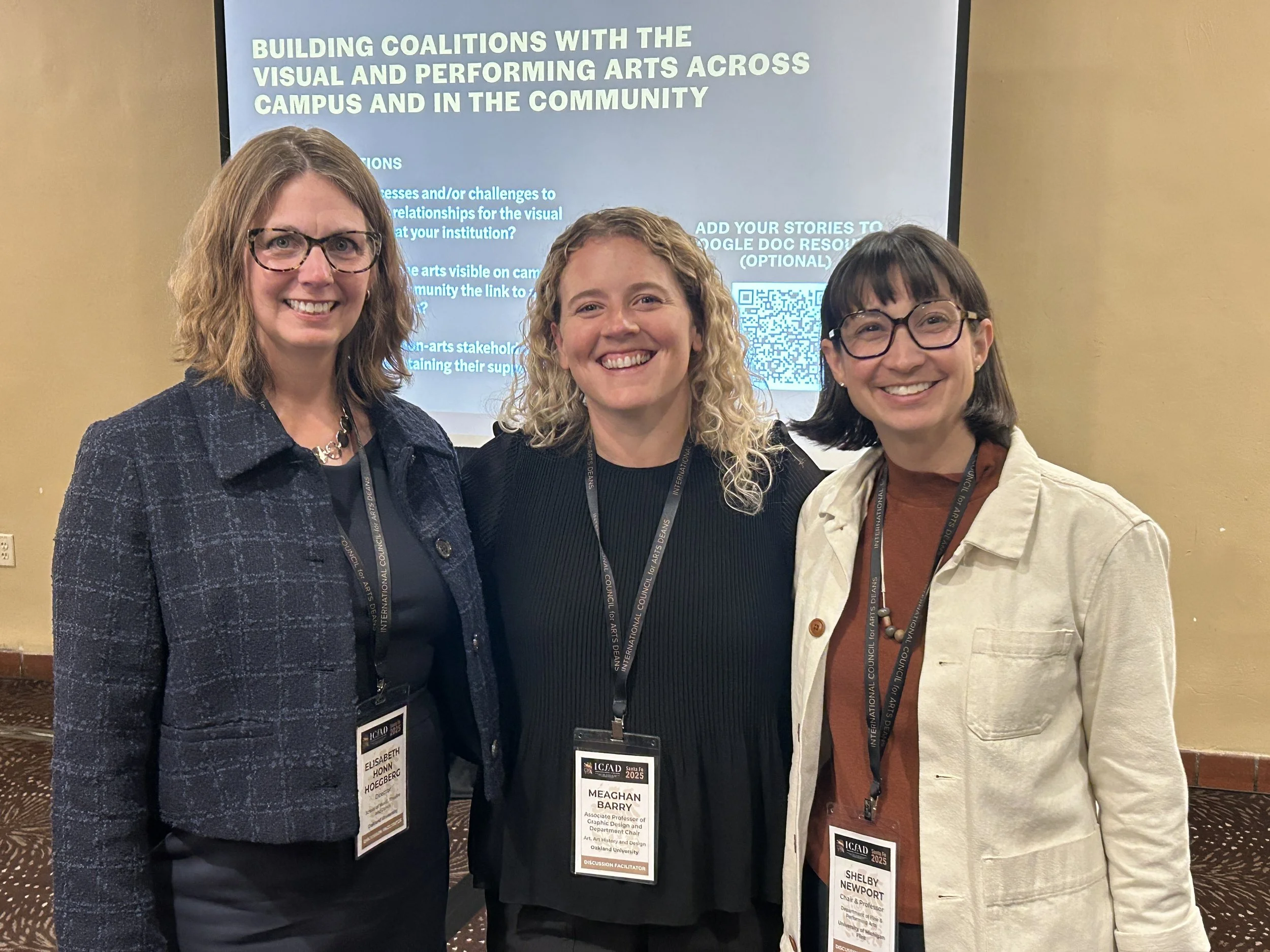
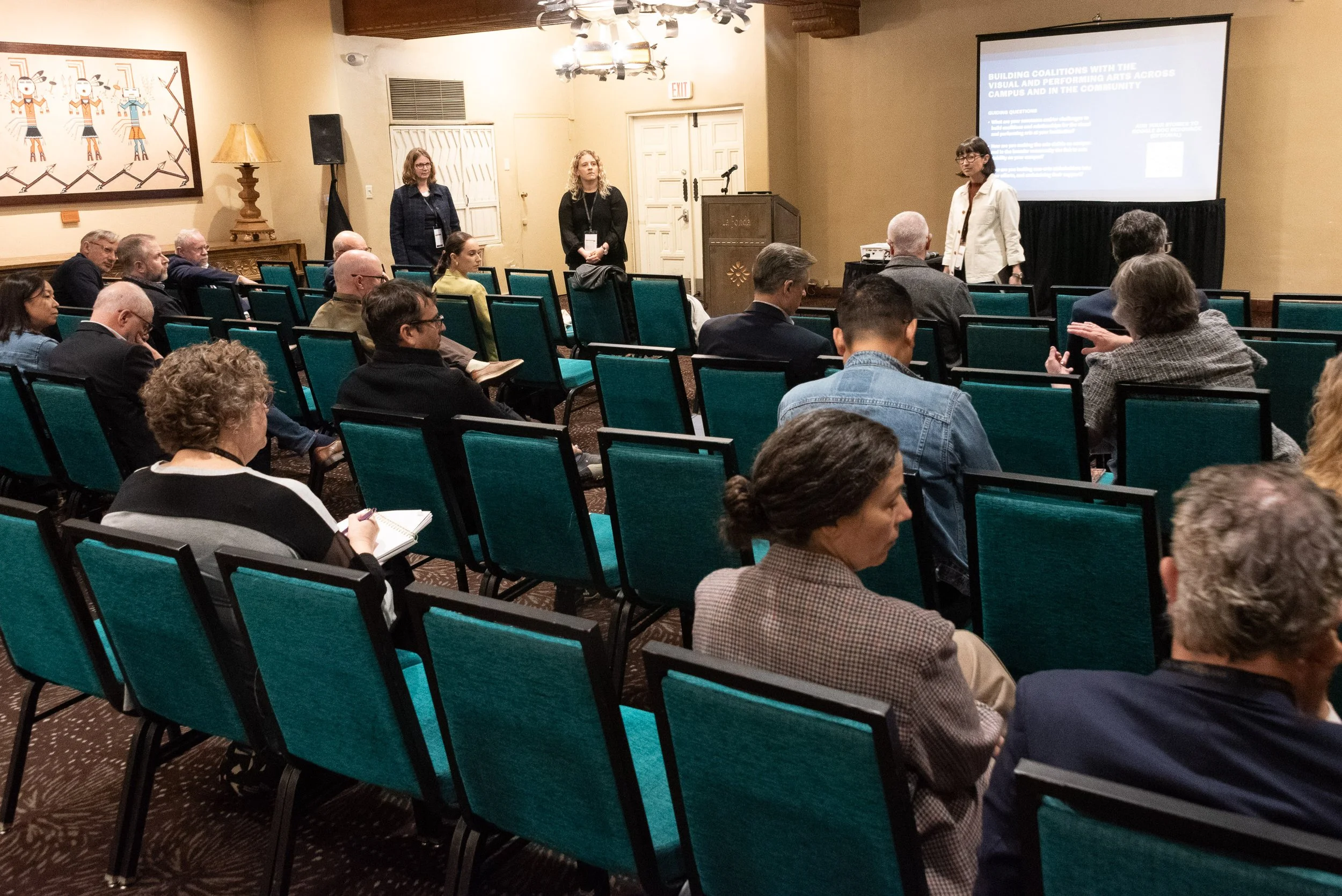


Building Coalitions with the Visual and Performing Arts Across Campus and in the Community
Roundtable Facilitator with Elisabeth Hoegberg Honn and Shelby Newport
International Council for Arts Deans Annual Conference
(Santa Fe, NM), Fall 2025, Peer Reviewed
-
Creating strong, supportive, and collaborative arts communities requires effective relationships internally and externally. In the wake of all the turmoil arts programs are facing, how do you maintain a unified front and advocate together? Our regional comprehensive institutions – both located in Southeast Michigan – have fine and performing arts departments housed within larger colleges, yet our challenges to build coalitions in the arts differ. In one, program reorganization has forced the arts together into a new department, requiring new relationships to form in the chaos of a merger. In the other, disparate arts programs across the college are proactively working to collaborate, but efforts can be hampered by funding limitations, lack of physical proximity on campus, and competing program / department needs.
Our roundtable asks questions such as:What are your successes and/or challenges to build coalitions and relationships for the visual and performing arts at your institution?
How are you making the arts visible on campus and in the broader community the link to arts viability on your campus?
How are you inviting non-arts stakeholders into your efforts,
and maintaining their support?
Roundtable participants are invited to share, discuss, and brainstorm actionable coalition-building strategies; together, we can accomplish impossible things. These ideas will be gathered into a shared document to be used as a resource post-conference.
-
Conference organizers shared responses to their post-session survey on “transferrable decanal skillset acquisitions”. 25 survey respondents attended our session. Of the respondents, they ranked our impact as:
VALUE OF TOPIC:
“Excellent”: 48%, 12 attendees
“Good”: 36%, 9 attendees
“Average”: 12%, 3 attendees
“Fair”: 4%, 1 attendee
EFFECTIVENESS OF PRESENTATION:“Excellent”: 44%, 11 attendees
“Good”: 40%, 10 attendees
“Average”: 8%, 2 attendees
“Fair”: 8%, 2 attendees
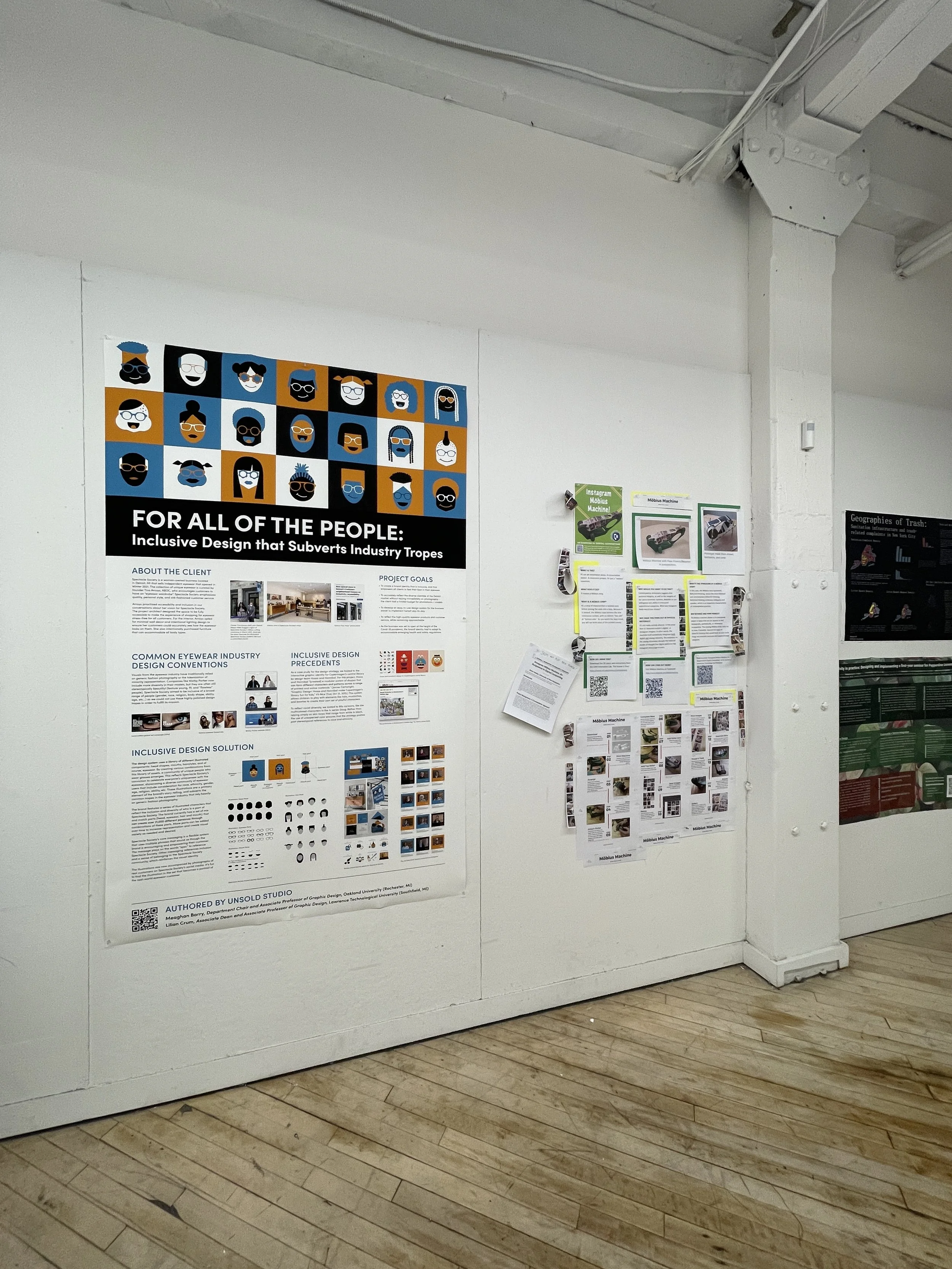
For All of the People: Inclusive Design that Subverts Industry Tropes
Poster Presentation with Lilian Crum (as Unsold Studio)
HASTAC 2023 – Critical Making & Social Justice
Pratt Institute (Brooklyn, NY), Spring 2023, Peer Reviewed
-
In her 2018 book Mismatch: How Inclusion Shapes Design, Kat Holmes equates the feeling of being excluded from a design artifact as akin to feeling left out on the playground as a child. In recent practices, brand designers and marketers are embracing inclusive design, yet these initiatives are often implemented in a trivial and superficial manner, simplifying issues of discrimination and racism and thereby doing more harm than good.
Launched in 2020, Spectacle Society is a woman- and minority-owned business located in Detroit, Michigan that sells independent eyewear that is curated by its founder. Spectacle Society has a conviction to celebrate everyone’s uniqueness with eyewear. To reflect the inclusive ethos of the business through its branding, the brand design team considered how to subvert traditional tropes in the industry.
As a case study for the design strategy, the designers for Spectacle Society looked to the interactive graphic identity for Copenhagen’s central library by design team Hvass and Hannibal. For this project, Hvass and Hannibal “[created] a modular system of shapes that can form different characters and patterns across a range of printed and online materials.” (James Cartwright, “Graphic Design: Hvass and Hannibal make Copenhagen's library fun for kids,” It’s Nice That, Oct 21, 2013.) This system allows children to play with elements like hats, mustaches, and bowties to create their own set of playful characters. For Spectacle Society, the designers developed a system of illustrated components that could be randomized, and that transcends the children’s audience to become more broad and inclusive. This system utilizes randomized head shapes, mouths, hairstyles, skin colors, and eyewear that showcases a diverse collection of people that represent various races, ethnicities, gender identities, ages, religions, and abilities, thereby creating a community of thousands of unique people who wear glasses.
These illustrations are a primary element of the brand’s story-telling, and subverts the common conventions in the eyewear industry that rely on generic fashion photography or the tokenization of minority representation. Further, the unique color palette of the branded system is not only unexpected and memorable, but references diversity in a critical and playful way. Rather than reducing identities to a spectrum of white to black skin tones, the color design system for Spectacle Society incorporates the color blue. The use of this unexpected color ensures that the strategy pushes past stereotypical references to race and ethnicity, a strategy that is utilized in the 1990s children’s television show, Doug, and that is discussed in “Racial Diversity in Nickelodeon’s Golden Age,” a Bitch Media article by Hanna White.
The design team considered recent strategies in branding and marketing that trivialized inclusive practices, such as Cadbury Dairy Milk’s “Unity Bar” campaign, which was initiated in honor of India’s Independence Day and that combined four shades of beige to brown chocolate to celebrate the country’s diversity. This strategy received criticism in several media outlets. The strategy for Spectacle Society is on a trajectory of inclusive design practices that may be considered for future branding and marketing practices.
-
Branding New Housing Experiences: How to Make 3D Printed Concrete Housing Appealing in Detroit
Co-presenter with Lilian Crum (as Unsold Studio)
Twelfth International Conference on The Constructed Environment
University of Monterrey (Monterrey, Mexico), Spring 2022, Peer Reviewed
-
In 2020 our branding firm, Unsold Studio, was hired to brand two partner companies – ModPublic (for-profit) and Citizen Robotics (non-profit) – that aim to create affordable housing in Detroit, MI, USA using new building technologies, including 3D concrete printing methods. In the region, the technology is unfamiliar in the built environment, and our goal was to effectively communicate its benefits to future dwellers, as well as partners, builders, and funders for both organizations.
Using the brands designed for ModPublic and Citizen Robotics as case studies, we will demonstrate how to make new environments approachable to a variety of audiences.
Designing Beyond the Brand: How Customer Experience Design Helps Businesses Adapt to the Covid 19 Pandemic
Co-presenter with Lilian Crum (as Unsold Studio)
Fifteenth International Conference on Design Principles & Practices
Remote, Winter 2021, Peer Reviewed
-
Customer experience (CX) design is an essential component of any brand to ensure that they can deliver on their promises to their clientele. Within the COVID-19 paradigm shift, effective CX design has become more essential than ever as businesses are forced to adapt to restrictions that are radically changing their interactions with their customers. Customer journeys are impacted by government-mandated lockdowns, the responsibility of enforcing social-distancing, and even with business models being forced to pivot. Presented by the Partners of Unsold Studio, this session uses case studies of recent brand design projects that integrate the customer journey into the many touch-points of the brand. Each project was developed during the pandemic, and considers elements like augmenting messaging via social media, creating streamlined checkout processes on digital platforms, enforcing social distancing regulations, communicating new delivery procedures, as well as maintaining the brand’s core promise as the businesses are forced to adapt.
-
Both Here and Nowhere: Rethinking the Role of Place in Design
Session Chair with Lilian Crum
College Art Association Annual Conference 2021
Remote, Winter 2021, Peer Reviewed
-
As designers, we think a lot about the role of place in our research and practice. Whether we are working on a site-specific project, responding to cultural or environmental conditions, moving through a building in virtual reality, or taking our students on a study abroad trip, both physical and virtual locations factor into our collaborations, discovery, and decision-making in significant ways. The Covid-19 paradigm shift poses limitations to our physical mobility as well as our ability to share physical spaces with others, forcing us to “shelter in place” and embrace the virtual realm. How will collaboration be affected? How will design education evolve? How will the nature of our projects change? What would McLuhan say about tomorrow’s “global village”? This session asks design practitioners, researchers, and educators to speculate about the role of “place” in design under these new conditions.
-
Peg Faimon, “Rural Engagement through Design: In-person and Virtual Ways to Impact our Communities and our Students
Cat Normoyle, “Mixed Realities as Design Intervention for Communities: Blending digital and physical experiences”
Bilge Nur Saltik, “Role of Collaborative Design Tools in International Design Teams”
Wes and Lindsey Larsen, “Lean into the Chaos, Fall into the Void”
Design x Business Session
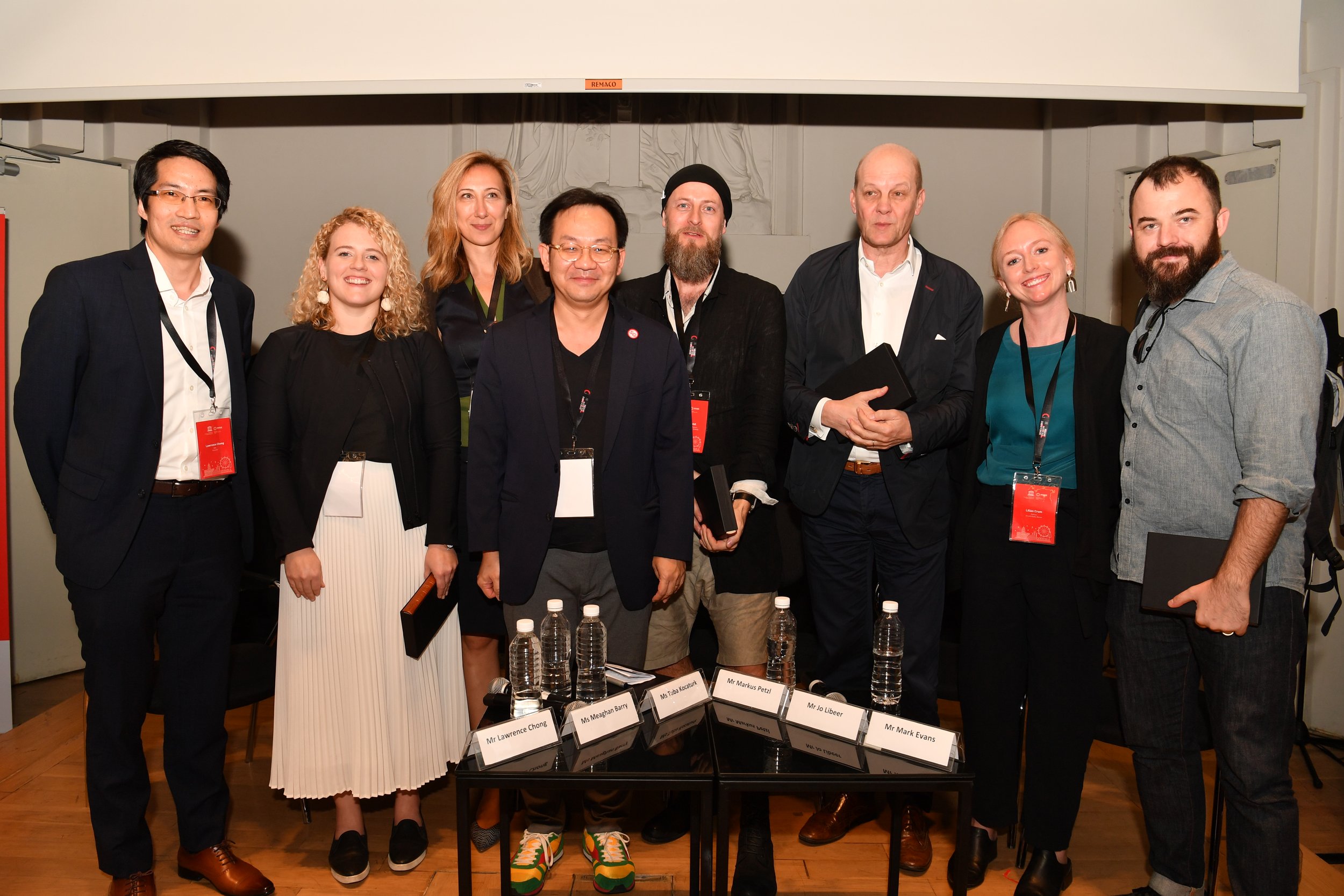
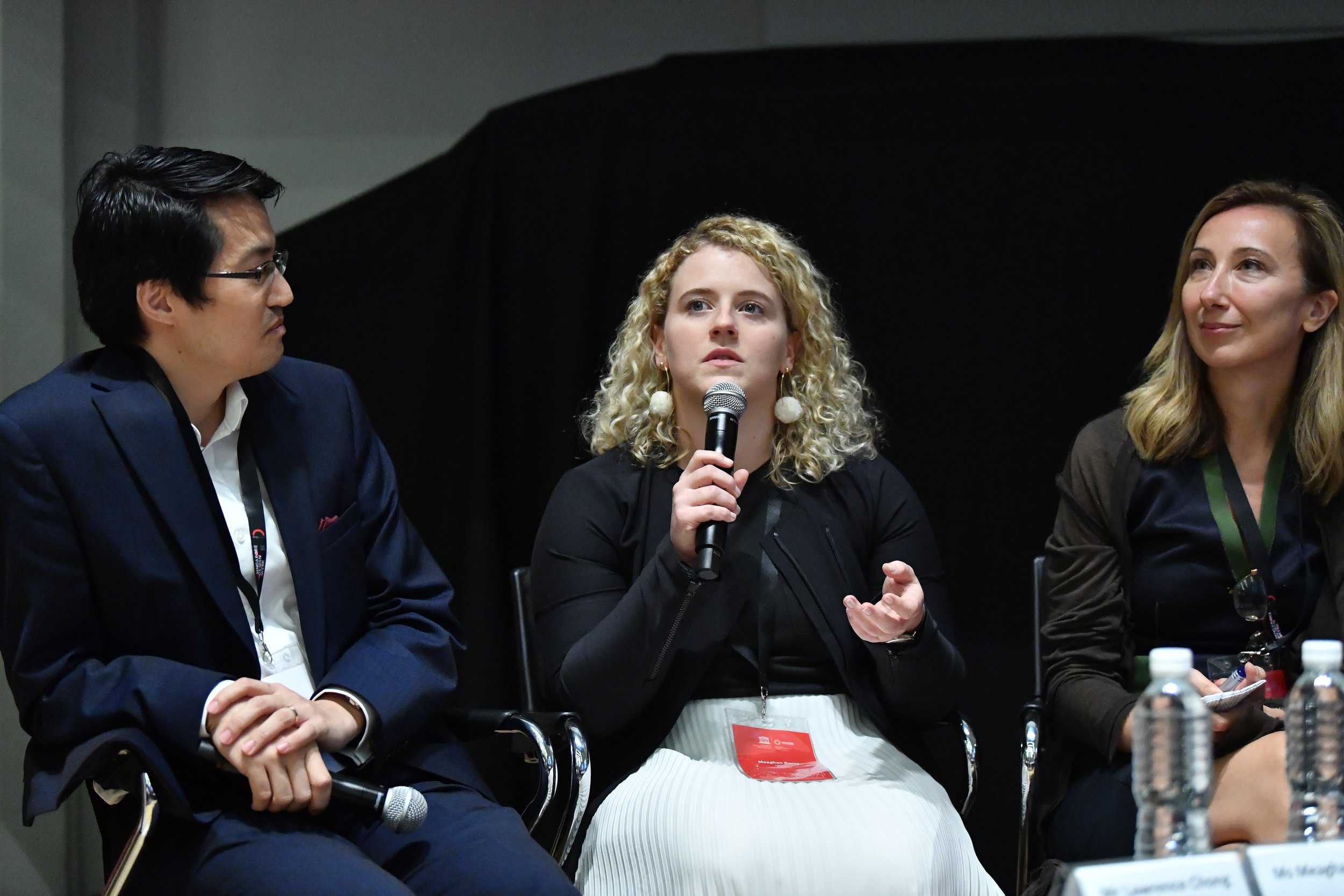
Presentation and Panel Discussion with Lilian Crum (as Unsold Studio)
UNESCO Creative Cities of Design Public Forum
National Design Centre (Singapore, Singapore), March 2019. Peer Reviewed
-
Unsold Studio formed in 2013, the year that Detroit declared bankruptcy. We will share our journey of growing with the city during the six years that we have been in operation. Our presentation will highlight the value of collaboration, community, and transcending design disciplines, and will showcase a model of using design to create commerce and community for others to follow. This will be achieved by using case studies (New Order Coffee, Grandmont Rosedale Development Corporation, the Kresge Foundation) that feature the teams that we have worked with (architecture, interior architecture, etc), how we have engaged with community members during the design process, and how the impact of our work touches all aspects of design—not just graphic. We will also emphasize our role as educators, and how our experiences help shape future generations of designers in the city.
-